
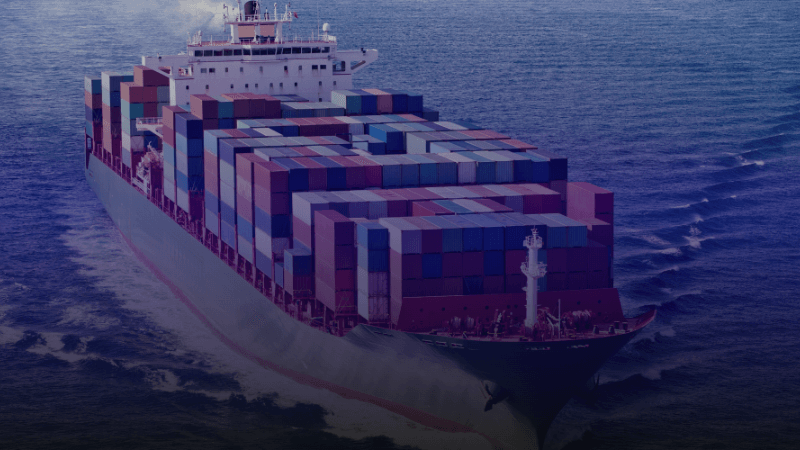
Major container carriers are seeing movement in their route planning through the Red Sea. According to The Loadstar, Cosco has reopened bookings for a Far East-Red Sea service. The ships are to transit the Bab al-Mandab between Yemen and Djibouti.
At the same time, Maersk and Hapag-Lloyd are expanding their gradual return via the Suez Canal. The joint Gemini service AE19 at Maersk and SE4 at Hapag-Lloyd will no longer be routed around the Cape of Good Hope, but instead through the Red Sea and Suez Canal. The change has been effective since August 10 and begins westbound with the Berlin Maersk.
Already in July, Maersk and Hapag-Lloyd had relocated another Asia-Europe service AE15 and SE3 respectively to the Suez route. According to industry sources, CMA CGM is also already using multiple connections via this corridor.
However, this does not yet represent a complete return to the old normal situation. Maersk explicitly states that there are currently no plans for a general switch of the entire East-West network. The shipping lines continue to monitor the security situation and can revert to the Africa route if conditions deteriorate.
This point is particularly important. Practically simultaneously with the return of additional liner services, a fatal attack on the cargo ship Tihamah in the Bab al-Mandab occurred on August 11. According to authorities, four crew members and two rescue personnel were killed.
For container traffic, a broader return to Suez could nevertheless have significant consequences. The route around the Cape ties up ships considerably longer. If more services are routed through Suez again, the effectively available ship capacity in the market increases accordingly. This could exert pressure on spot rates in the medium term. However, an automatic or immediate reduction in freight rates cannot yet be derived from this—port congestion, demand, equipment availability, and security surcharges also play a role.