Import
Vehicle is permanently imported into Switzerland. Customs declaration, VAT and car tax (if applicable) are due. Registration with the road traffic office follows.
Lädt …

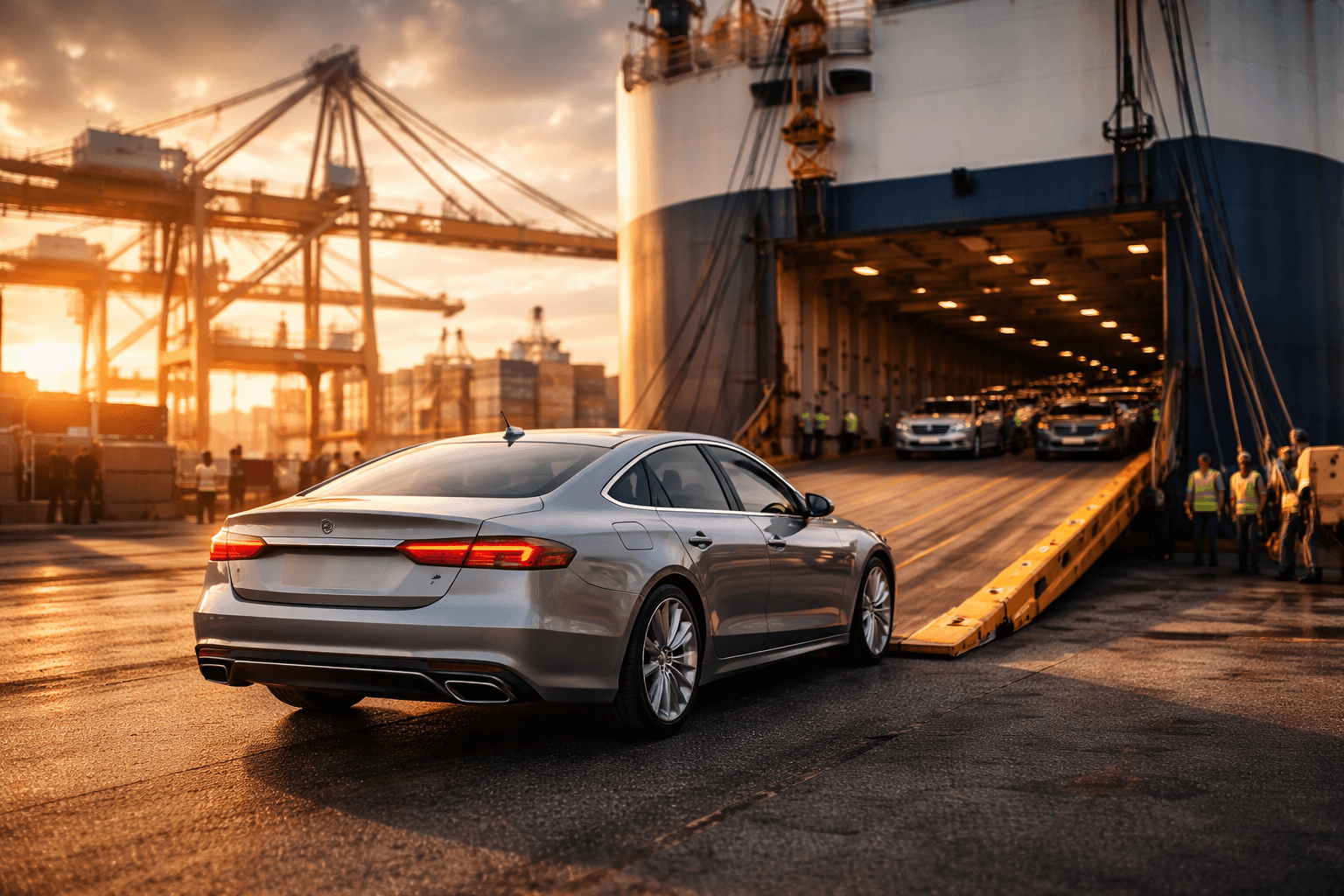
Whether it’s a car, motorcycle or commercial vehicle: clean paperwork, the right customs declaration and a clear process matter. This page consolidates the key basics in a practical way.
Import, export and transit – the three basic cases for vehicle border crossings.
Vehicle is permanently imported into Switzerland. Customs declaration, VAT and car tax (if applicable) are due. Registration with the road traffic office follows.
Vehicle permanently leaves Switzerland. An export declaration may be required depending on destination. VAT refund may be possible.
Vehicle passes through a territory without being permanently imported. Often a T1 document or Carnet de Passages en Douane (CPD) is required.
Cross-border vehicle movements typically involve import (into Switzerland), export (out of Switzerland) and transit (moving through). Depending on the route, a transit document (e.g. T1) can be relevant.
What is due? Concrete rates and special rules.
8,1 %
On vehicle value incl. transport costs to destination (CIF value).
4 %
For passenger cars and light commercial vehicles. Based on vehicle value.
CO₂
If targets are exceeded for new cars and vans. Calculated via ASTRA.
0 %
Vehicles may be imported duty-free if registered to the importer abroad for at least 6 months.
ℹ️ The current requirements of BAZG and ASTRA apply. Exact duties depend on vehicle type, origin and import case.
From preparation to registration – the typical process at a glance.

Complete documents save time and avoid problems at customs clearance.
With vehicle value in CHF or convertible currency incl. transport costs.
Foreign vehicle registration or Certificate of Conformity (type approval).
Passport or ID of the importer or authorized company.
For preferential tariff rates from countries with a FTA with Switzerland.
Electronic import customs declaration with BAZG.
Since 1.1.2024 exclusively digital via ASTRA's "Fahrzeugimport CO2" application.
Mandatory for new cars and vans – what you need to know.

Passenger cars and vans are subject to CO₂ targets. If the vehicle exceeds the target, a penalty is levied retrospectively by the Federal Office of Energy. Import and manufacturing data must be reported via ASTRA (since 1.1.2024 exclusively digitally).
Series-produced vehicles require type approval (homologation) from ASTRA. This is waived for individual imports for personal use. Individually imported vehicles undergo an individual inspection by the cantonal registration authority before registration.
If a vehicle is moved through a territory without being finally imported there, a transit procedure can be required. This is especially relevant for multi-country routes.
For CO₂ compliance and type approval, specialized agencies (e.g. Bourse-CO2, CO2 Börse AG, DTC Dynamic Test Center AG) can be engaged.
Depending on the route, different customs offices are relevant. Opening hours and responsibilities can vary—check in advance what fits your case.
Common questions about vehicle customs in Switzerland – answered concisely.
Typical documents include the purchase contract/invoice, foreign registration papers, proof of identity, and customs/import paperwork. Depending on the case, additional proofs (e.g. origin/preference, technical documents) may be required.
Import covers declaration/duties when bringing a vehicle into Switzerland. Export is the declaration when leaving Switzerland. Transit (e.g. T1) is used when a vehicle is moved through a territory without being finally imported there.
Very often yes—13.20 A is a key proof of customs clearance for many import cases. See our dedicated 13.20 A page for details and FAQs.
Common components: transport costs, customs/import duties (depending on origin/rules), Swiss VAT, and possibly further vehicle-related charges. There are often additional fees for paperwork/handling and later registration steps.
For certain imports (e.g. very new vehicles), CO₂ requirements can be relevant. The exact assessment depends on the vehicle and current official rules—this page provides an overview and links to further sources.
Look up terms in the glossary
For deeper guidance, use our focused entry points (status selection, curated links, 13.20 A explanation).
Our editorial team keeps this hub continuously up to date: Passar/Declar, EU customs reform 2026, HS codes, TARIC, CBAM, customs thresholds and country guides. Sub-pages lead to detail articles, CMS entries to editorially reviewed expert content.