
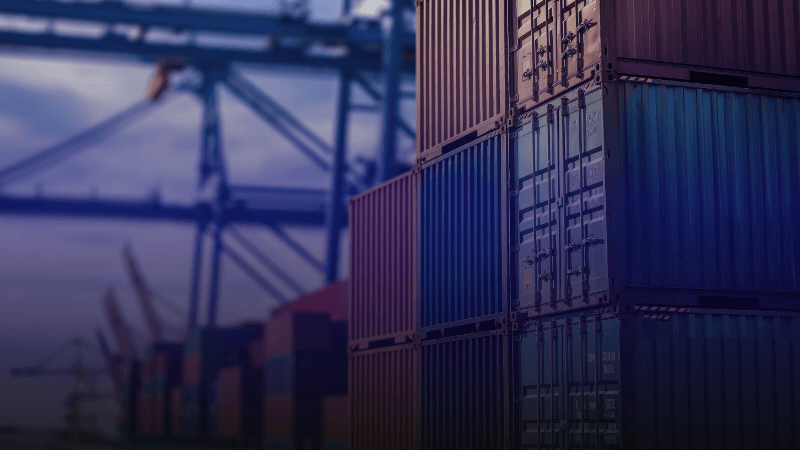
Kazakhstan is seeking to leverage its position between China and Europe more strongly for transit traffic. To this end, significant investments are currently being made in roads, rail routes, border crossings, ports, and logistics centers. The focus is on the so-called Middle Corridor, also known as the Transcaspian International Transport Route.
One of the most important new projects is the Beineu–Saksaulsk connection in western Kazakhstan. The Kazakhstani government speaks of approximately 800 kilometers of new trunk road. It is designed to create a more direct connection from the border crossings toward China to the Kazakhstani Caspian ports of Aktau and Kuryk. This should shorten the route toward Europe by approximately 1,000 kilometers.
From there, the journey does not simply continue on the road. Containers must be transported across the Caspian Sea and subsequently continue via Azerbaijan and Georgia. From there, depending on the connection, it continues either via Turkey or across the Black Sea toward Europe. The Middle Corridor is therefore a combination of rail, truck, ferry, and port handling.
Kazakhstan is therefore not only building roads. Rail routes and ports are also being expanded. In Aktau, for example, container capacity is being increased. In Kuryk, work is also underway on additional transhipment facilities. This demonstrates: here, piece by piece, a larger transport corridor is being created—not simply a single new road.
For European shippers, this development is of interest. The Middle Corridor can offer an additional option for transporting goods between Asia and Europe without using the traditional land route through Russia. At the same time, it creates an alternative to lengthy sea routes.
However, expectations should not be set too high. The corridor continues to involve multiple border crossings and transshipments. Particularly when switching from rail to ship and back again, time, costs, and delay risks are incurred. The World Bank nonetheless sees considerable potential: with further investments and better coordinated processes, transport times along the corridor could be significantly reduced by 2030.
For Europe, the connection is additionally of interest because Kazakhstan supplies numerous raw materials that are needed for industry, energy, battery, and high-technology applications.