
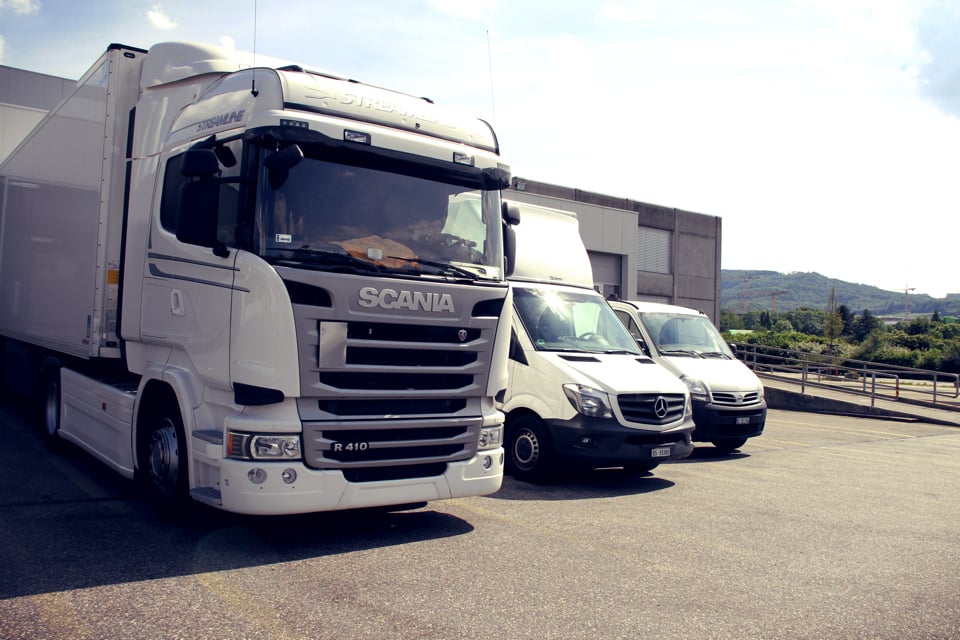
From July 1, 2026, several changes to road traffic legislation will come into effect in Switzerland, which are relevant for transport companies, fleet operators, and cross-border delivery van traffic. The focus is on two themes: the better treatment of trucks powered by electricity or hydrogen and the extension of working, driving, and rest time regulations to certain light commercial vehicles in international freight transport.
The Federal Council has approved the corresponding adjustments in the field of traffic rules and technical regulations. This brings Switzerland closer to European regulations in important areas. For the industry, it’s not just a minor formality, but rather concerns vehicle configuration, payload, operational planning, control devices, driver cards, training, and data archiving.
The first point concerns trucks and articulated lorries with alternative propulsion. Electric and hydrogen vehicles often come with greater weight due to their batteries, fuel cells, tanks, or other technical components than comparable diesel vehicles. Without adjustments, this could reduce their payload and disadvantage such vehicles in international competition.
The new regulation aims to compensate for this technical extra weight. The practical thought behind this is simple: a clean-powered truck should not become less economical just because the propulsion technology is heavier. This is important for transport companies because payload directly influences costs, route planning, and vehicle utilization in day-to-day operations.
The second point concerns light commercial vehicles and vehicle combinations over 2.5 tons. From July 1, 2026, such vehicles engaged in international goods transport will be subject to ARV 1 if the driver spends more than half of their working hours driving. This will enforce working, driving, and rest time regulations that were previously mostly known from the heavy commercial vehicle sector.
A clear demarcation is important. It is not about every delivery van in Swiss domestic traffic. The ASTRA specifies that nothing will change for traffic within Switzerland. The affected parties are international goods transports and similar cross-border operations. Vehicle combinations can also become relevant if the tractor and trailer together exceed the 2.5-ton threshold.
In the EU, this change is part of the Mobility Package. From July 1, 2026, vehicles used for commercial cross-border operations over 2.5 to 3.5 tons must be equipped with an intelligent tachograph. Several specialist authorities point out that existing vehicles may also be affected. Switzerland will adopt this logic for international traffic.
For companies, this means: Anyone transporting goods across the border with delivery vans, trucks, or smaller vehicle combinations must now review their fleet. Not only the registered gross weight matters, but also the type of operation, commercial purpose, driving share of employees, trailer operation, and international routes.
The practical implementation should not be underestimated. A tachograph is not just a device in the dashboard. It brings obligations. Companies need driver cards, company cards, processes for reading data, archiving, inspections, training, and clear internal rules. Those who prepare too late risk unnecessary downtimes and discussions during inspections.
For traditional Swiss domestic transports, the change remains limited. Those who only operate within Switzerland will not automatically be subject to tachograph obligations under the new international 2.5-ton rule. However, those who regularly drive to Germany, France, Italy, Austria, or Liechtenstein should take a closer look.
Particularly in the express, courier, assembly, spare parts, and service logistics sectors, the change may become noticeable. Many companies deliberately use vehicles under 3.5 tons because they were administratively simpler than heavy trucks. This gap is narrowing in cross-border traffic. The delivery van remains flexible, but it will be regulated more closely to classical trucks.
For electric commercial vehicles, the weight compensation is a positive signal. It removes part of the practical disadvantage of alternative drives. Nevertheless, decarbonizing road transport remains challenging. Charging infrastructure, range, purchase prices, route profiles, and weight reserves must align. The new regulation helps but does not resolve all operational issues.
The message for the industry is clear: From July 2026, international road transport under 3.5 tons will become more formal. At the same time, the transition to electric and hydrogen-powered commercial vehicles should become somewhat more practical. Those who analyze their fleet thoroughly today can avoid future hustle.